
Systems Thinking: The Operating System
Systems thinking is the operating system of Pink Youth Rising. Complex public-health challenges involve multiple causes, multiple institutions, and multiple behaviors, shaped by relationships between people, information, culture, access, behavior, trust, policy, and resources.
Move Beyond
- ×Symptoms
- ×Siloed solutions
- ×Single-issue messaging
- ×Short-term reactions
- ×Assumptions
- ×Blame
Move Toward
- Root causes
- Relationships & feedback loops
- Interdependencies
- Stakeholder perspectives
- Leverage points
- Long-term thinking & coordinated action
Why Systems Thinking Matters in Public Health
Public-health outcomes are shaped by interconnected biological, social, cultural, behavioral, and institutional factors. Breast health is the entry point, but the connections extend outward.
“Whole-body health is the lens. Systems thinking is the method. Breast health is the point of action.”
Why Teach Systems Thinking to Young People?
Young people are not only future beneficiaries of better health systems; they can be trained to shape the systems they will inherit.
“Teaching systems thinking early has the potential to change not only what young people know, but how they approach problems throughout their lives.”
A Pioneering Approach
Systems thinking is typically found at a professional level, in professional strategy, public policy, or organizational design. It is rarely made accessible to young people in practical, applied ways.
Pink Youth Rising represents a pioneering effort to introduce systems thinking to youth through real public-health challenges, making abstract concepts tangible through authentic tasks, interdisciplinary collaboration, and visible outcomes.
The Pink Youth Rising Methodology
Begin with a real public-health challenge
Introduce systems-thinking concepts
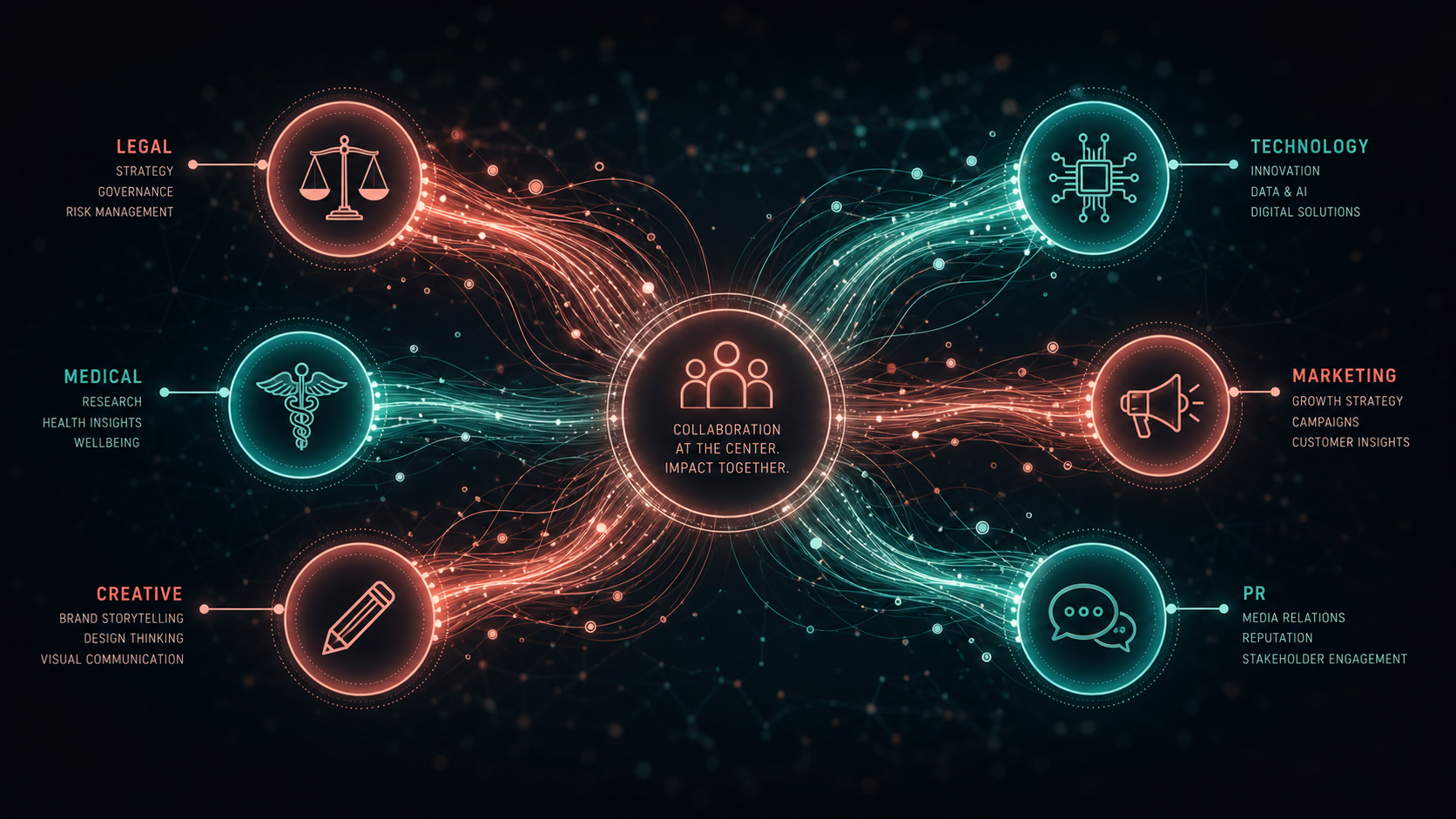
Form interdisciplinary teams
Investigate the problem and its context
Map relationships, stakeholders, and contributing factors
Identify assumptions and possible leverage points
Use ethical AI to support research and inquiry
Develop a campaign as an authentic task
Present the concept and receive feedback
Refine the campaign through collaboration
Observe how students work over time
Continue developing students who demonstrate leadership, consistency, and commitment
Systems Thinking in Practice
These are relationships and public-health thinking connections — not a clinical diagnostic model.
Breast Health
The point of action. Every other factor on this map connects back to breast health — not as an isolated topic, but as the entry point into whole-body, whole-community health thinking.
Select any factor to see how it connects. Use Tab and Enter to explore with a keyboard.
Evidence of Application
What is underway, what has been observed, and what is being tested.
2
Active cohorts
10
Interdisciplinary teams
6
Disciplines per team
Week 16
University cohort progress (of 16)
Week 10
Secondary cohort (paused, continuing)
Underway
Observable student development
Note: These reflect what is underway and observed. Outcomes are being carefully distinguished from what has been tested or formally measured.
Systems Thinking Beyond This Program
Breast health is the first application. The systems-thinking capability being developed is transferable: understand complex problems, work across disciplines, design responsible interventions, learn from communities, use evidence, adapt solutions, and build leadership capacity.
Broader application represents a future possibility, not a completed achievement.